

"...The butcher swore that the body was still warm, from which they concluded that the deceased had the severe defect of not being quite dead, or, to state it better, of letting himself be reanimated by the devil for that is exactly the idea they have of a vrykolakas"
- Relation d'un voyage du Levant, Joseph Pitton de Tournefort
- Relation d'un voyage du Levant, Joseph Pitton de Tournefort
Ever wondered how the vampire myth started? When the term "vampire" first came around? How certain beliefs about vampires stemmed from folkloric superstitions? And howthe vampire has progressed in legend, lore and reality over the centuries? Here I have written an essay with information gathered from various sources to answer all these questions and more
From the beginning of time legends of vampires have existed on this place we call Earth. The interesting, distinguishing mark of the vampire is that unlike other "monsters", the vampire has its roots in nearly every part of the world. From Ancient Greece to modern Day, the Vampire has been eternally preying on our imagination, forcing us to ask ourselves whether those things we dismiss as myths are just that...or more.
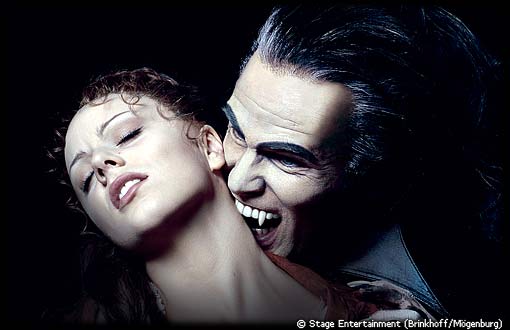
The history of the vampire begins In ancient Persia, where a vase was discovered depicting a man struggling with a huge creature which is trying to suck his blood. Then, in Babylonian myth a deity known for drinking the blood of babies, Lilitu or "Lilith", was discovered. She was reputedly the first wife of Adam according to old Hebrew texts removed from the Old Testament, and left her husband due to his sexual ineptitude, becoming the Queen of Demons and Evil spirits. In China during the 6th century BC, traces of the "Living Dead", or revenants as they are known, were also found. More legends continued throughout all the world, including India, Malaysia, Polynesia and the lands of the Aztecs and Eskimos. According to the Aztecs, the offering of a young victims blood to the Gods ensured the fertilization of the earth. But truly, the vampire proper originates from European civillization...ancient Greece to begin with. There were numerous bloodthirsty Goddesses in both Roman ang Greek mythology, known as Lamiae, Empusae and Striges. These names eventually evolved into the general terms for Witches,Demons and Vampires. But these Vampires, though they do drink blood, were only Goddesses...not "living Dead", but disembodied divinities capable of taking on human appearances so that they might seduce their victims. As time passed on, and Christianity grew in popularity, the redemptive value of blood became apparant. Holy Communion, which includes drinking wine symbolizing Christ's blood and Bread symbolizing his flesh was at times taken quite literally. Some people, confusing pagan beliefs with transubstantiation (the actualy presence of Christ's flesh and blood during Communion) took part in feasting on human flesh and drinking human blood. During the 11th Century, witches and doctors alike prescribed virgin blood to cure all illnesses. Also during this time, some corpses found intact all over Europe began a huge vampire scare. The belief came about that people who died without a chance to receive last rites,or those who had commited suicide or had been excommunicated were destined to return to the earth as revenants. Various accounts of the discovery of Vampires can be read in books such as The Diabolical Dictionary (Dictionnaire Infernal) by the Bishop of Cahors; the Courtiers Triflings(De Nugis Curialium) by Walter Map, and the History of England(Historia Rerum Anglicarum) written by William of Newburgh. The phenomenon of Vampirism continued through the Renaissance era only sporadically, but again grew to epidemic proportions in the 14th Century, mainly in central European Regions of Prussia, Silesia and Bohemia. The bubonic plague was thought to be the work of Vampires and panic of infection led people to bury their dead without completely verifying that they were truly deceased. It was then no wonder that so many encounters of Vampires rising from their graves during this time were noted. A person, buried alive, would try to claw his way out of the grave and would be discovered covered in blood from the wounds he had inflicted upon himself by doing so. This, of course, would label him as a vampire
 In the mid-15th Century, Vampirism again reared its head, most notably in the trial of Frenchman Gilles de Rais. A former member of Joan of Arc's guard and erstwhile Marshal of France, he retired to his lands in Southwest France, devoted to his quest of finding the secret of the "Philosophers' Stone" in blood. He killed about 200 to 300 children by way of horrifying torture, in order to use their blood in his experiments. Later, in the 19th century, Joris-Karl Huysmans portrayed him as an authentic vampire in his novel La-Bas. Also during this time, another historical figure became associated with vampirism. His name was Vlad Tepes Dracula, Prince of Wallachia, an ancient kingdom which is now part of Romania. His double name of Tepes (meaning "Impaler") and Dracula (after his father, Dracul, meaning Devil or Dragon...the 'a' added on to mean 'son of...') suited him quite appropriately. Both a national hero for liberating his lands form the Ottoman invaders and a bloodthirsty tyrant who ordered thousands of people impaled for his pleasure, it is no wonder that his name became synonimous with the vampire legend. Four centuries later, Bram Stoker would write the infamous novel Dracula, which would forever give us the sterotype of the classic vampire.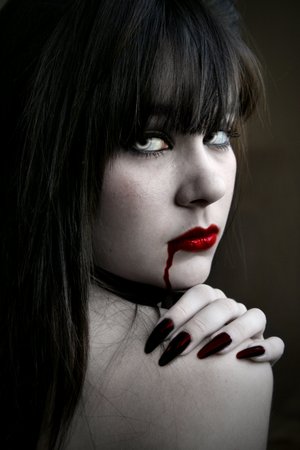
Vampirism, though never completely vanished, dwindled slightly from the 15th through 17th centuries. In 1611, however, in the superstitious land of Hungary, Countess Erzsebet Bathory (Elizabeth Bathory or the "Blood Countess")began the legend afresh. She was accused of kidnapping and torturing young girls to death and then bathing in and drinking their blood. She believed that this would preserve her youth and looks. But how did she come to this conclusion? Well, apparantlym she was the wife of a Count who was always away at war. Becoming bored with her lifestyle, she began to study black magic which led to her horrible endeavors. When a large number of young women became missing, Bathory's cousin led a detachment of soldiers and policemen to capture her. She was spared execution because of her royal ties, but was locked up in a tower room for the rest of her life with door and windows shut. Her accomplices though were all executed. This event in history gave rise to numerous rumours of vampirism and inspired many writers unto today. Also, this coupled with poverty and illiterate populations of the time, led to an explosion of vampire and werewolf superstitions in Southern and Eastern Europe. The belief that "Vrykolakas" ( slavic for werewolves) would die and become vampires in the hereafter tied the two myths together quite conveniently. The word 'Vampire', until now unknown, became used as a term for the very first time in 1726, following thousands of reports of vampirism due to the plague. It was first coined in German as "Vanpir" in a report of one case of vampirism. This evolved into "vampyre" in 1732 (used in French) and finally into the English word "Vampire" later that same year. This was the beginning of the end for the vampire as we know it...

ไม่มีความคิดเห็น:
แสดงความคิดเห็น